Patient Guides / How to See a Doctor
An Essential Guide to the Healthcare System in China
Summary: Managing the health of 1.4 billion people is a monumental task. For expats and global health observers alike, understanding the sheer scale and rapid evolution of the healthcare system in China offers a fascinating glimpse into one of the world's most complex medical infrastructures.
Author: China Medical Info Published or updated: March 2026 Read time: 9 min read
Editorial And Source Review
Editorial review: China Medical Info Editorial Team. Last content check: July 3, 2026. Educational scope, clarity, verification pathways, and safety disclaimers. Not clinical review, diagnosis, treatment guidance, legal advice, visa advice, or insurance advice.
Official Source Paths
Use these official sources to verify current rules, policies, services, or payment requirements before acting on this educational guide.
- National Health Commission - Official English-language public health, hospital, health policy, and service information.
- State Council health and policy resources - Official English-language public-service and policy resources for healthcare and living in China.
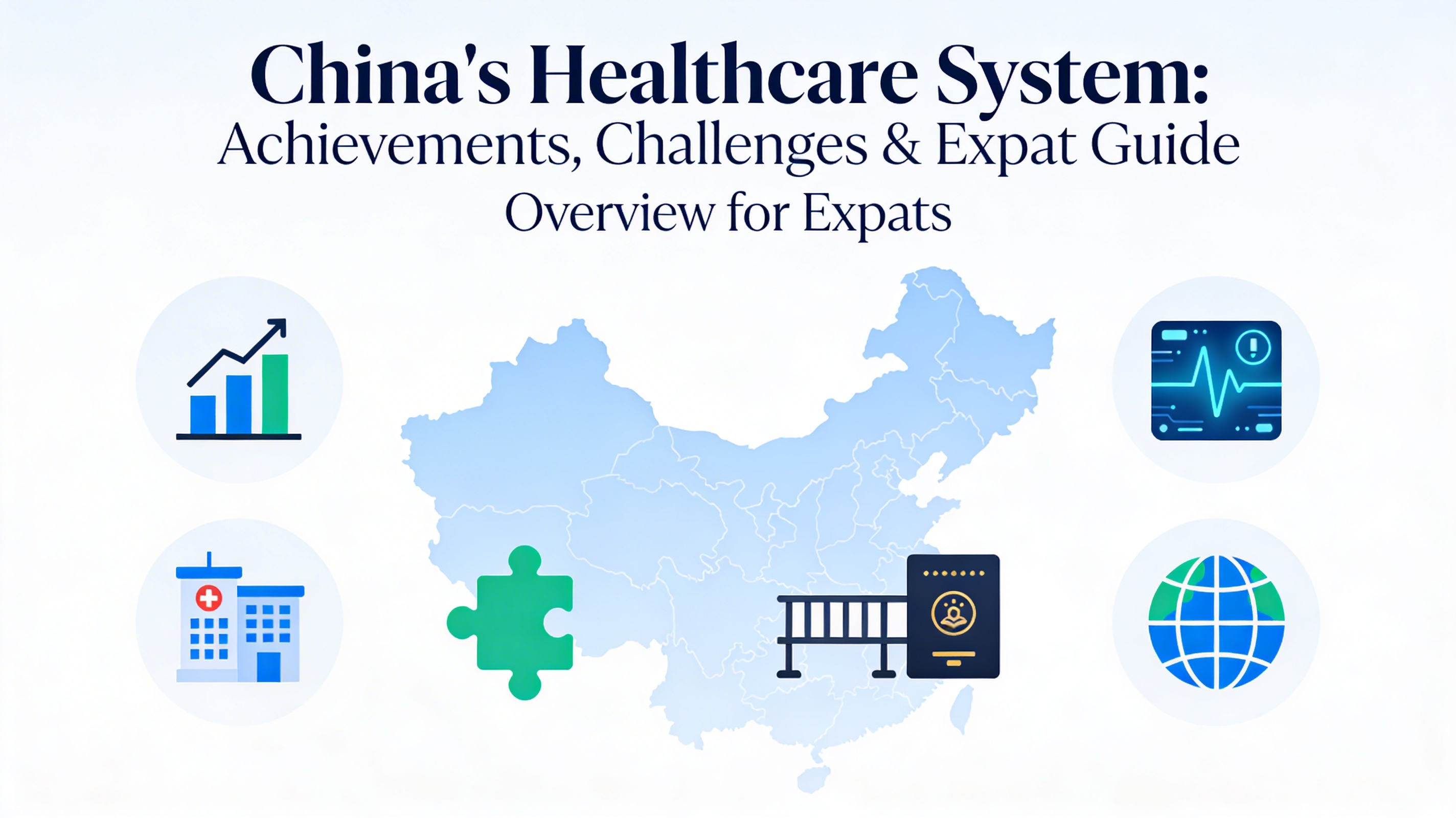
Over the last seven decades, the China healthcare system has transformed dramatically. Life expectancy has skyrocketed, and public medical insurance now covers over 95% of the population. However, like many rapidly developing nations, it faces structural challenges — balancing world-class medical advancements in tier-one cities with the fundamental needs of rural communities.
Remarkable Achievements in Public Health
The historical progress of China healthcare is undeniable. Before 1949, the average life expectancy was just 35 years; today, it is approaching 80, rivaling many advanced industrial societies. Childhood mortality rates have plummeted, and the country has successfully controlled or eradicated major communicable diseases. A cornerstone of this success is the national immunization program — the government maintains a vaccination rate of over 90%, providing children with free vaccines against numerous diseases. Physical infrastructure has also grown exponentially, from just a few thousand hospitals in the mid-20th century to tens of thousands today. Perhaps the most significant achievement is the expansion of public health insurance. Today, the vast majority of citizens — including hundreds of millions of rural farmers who previously had no safety net — are enrolled in the state-backed basic medical insurance system.
Current Challenges: Aging and Personnel Shortages
Despite massive investments, the Chinese healthcare system faces two critical modern challenges: an aging demographic and a shortage of primary care physicians. China's rapidly aging population means that by 2050, nearly a third of the population will be over 60, placing immense pressure on long-term and geriatric care systems. There is also a distinct shortage of General Practitioners (GPs). While major hospitals boast world-class specialists, the foundational layer of neighborhood GPs — common in Western systems — is still developing here. This often drives patients directly to large, crowded hospitals even for minor ailments, straining top-tier medical resources. To combat this, the government has launched aggressive targets to train hundreds of thousands of new general practitioners over the next decade, aiming to build a more robust primary care network.
Traditional Medicine and Future Goals
A unique aspect of healthcare in China is the seamless integration of Traditional Chinese Medicine (TCM) with modern Western medical practices. Most major public hospitals feature dedicated TCM departments, and the government heavily supports its research and clinical application — utilizing it alongside conventional drugs to treat everything from chronic pain to respiratory illnesses. Looking forward, the government's ambitious 'Healthy China 2030' initiative shifts focus toward preventative care and healthy lifestyles. It sets national targets for increasing physical activity, reducing smoking, and improving dietary habits among citizens. For expats, understanding this dual system — cutting-edge modern medicine integrated with ancient practices, guided by large-scale national health initiatives — provides essential context for navigating life and wellness while living in China.
Summary
The evolution of the healthcare system in China is a story of incredible scale and ambition. While challenges like an aging population and primary care shortages persist, continuous reforms and a focus on preventative wellness are actively shaping a more sustainable medical future.
This article is for informational purposes only and does not constitute medical advice, diagnosis, treatment guidance, emergency triage, referral, or appointment booking. Verify current hospital procedures directly with hospitals and consult qualified healthcare professionals for medical decisions.