Patient Guides / Language and Support
How to Overcome the Language Barrier in Chinese Hospitals: A Practical Guide for Foreigners
Summary: Worried about seeing a doctor in China because of the language barrier? You're not alone — this is one of the biggest concerns for foreigners seeking medical care. The good news is that there are practical ways to overcome this challenge and still receive safe, effective treatment.
Author: China Medical Info Published or updated: April 2026 Read time: 7 min read
Editorial And Source Review
Editorial review: China Medical Info Editorial Team. Last content check: July 3, 2026. Educational scope, clarity, verification pathways, and safety disclaimers. Not clinical review, diagnosis, treatment guidance, legal advice, visa advice, or insurance advice.
Official Source Paths
Use these official sources to verify current rules, policies, services, or payment requirements before acting on this educational guide.
- National Health Commission - Official English-language health service and public health information.
- National Immigration Administration - Official entry, stay, and immigration-service information for visitors and foreign residents.
- State Council services and policy resources - Official English-language public-service resources for living, visiting, and emergency preparation in China.
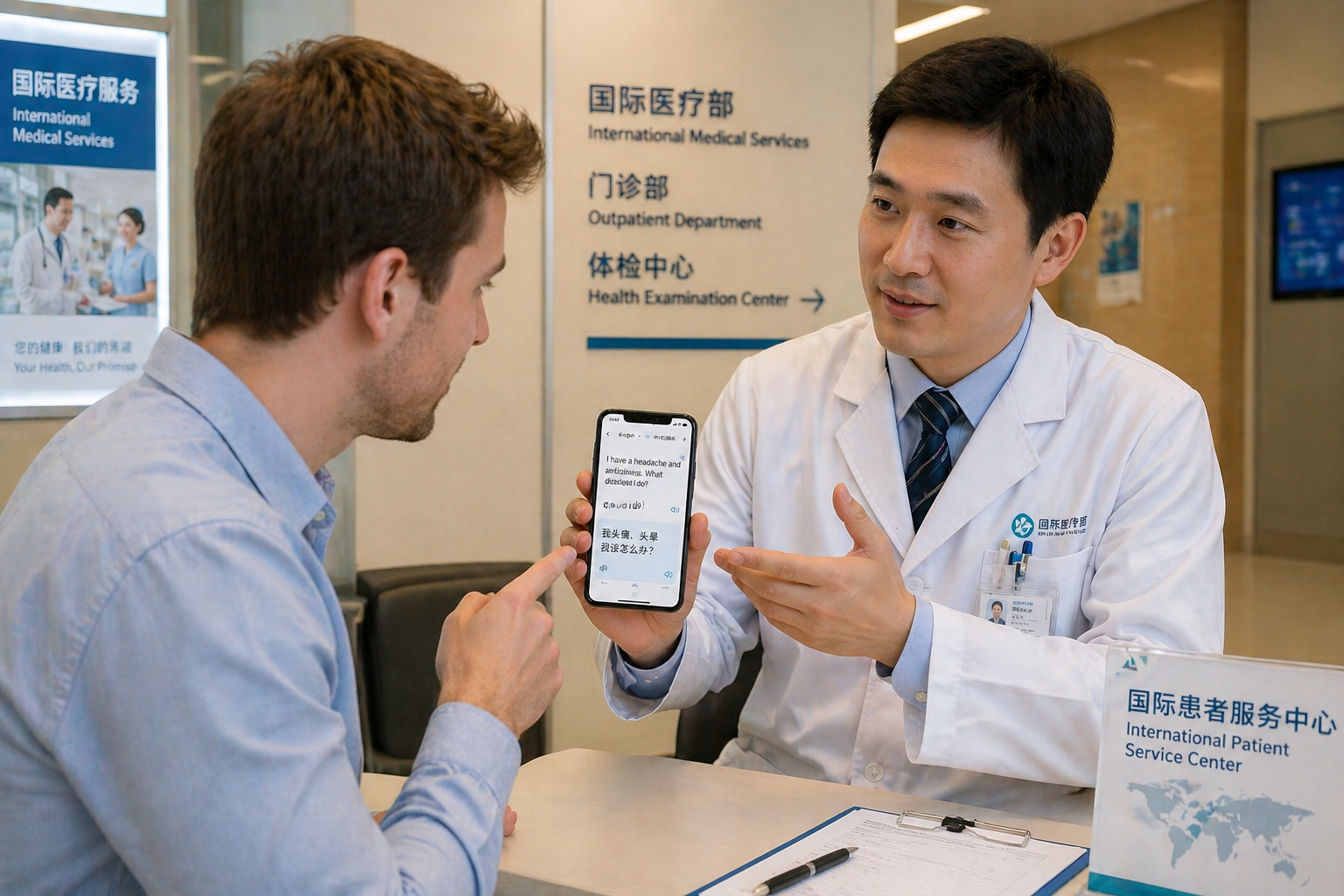
China's healthcare system is highly developed, especially in major cities. However, most public hospitals primarily operate in Mandarin, and English-speaking staff may be limited. For foreign patients, communication can become a key obstacle — affecting everything from registration to diagnosis and treatment. Understanding how to navigate this language barrier is essential for a smooth healthcare experience in China.
Why Language Barriers Exist in Chinese Hospitals
Language challenges are most noticeable in public hospitals, where doctors and staff primarily speak Mandarin, patient volume is high leaving little time for detailed communication, and medical terminology can be difficult to translate directly. In contrast, private and international hospitals are more likely to offer English-speaking services. ⚠️ Miscommunication in a medical setting can lead to incorrect treatment — preparation is essential before visiting a hospital.
How to Overcome Language Barriers in Chinese Hospitals
Use Translation Apps: Mobile tools can bridge the gap instantly with real-time voice translation, camera translation for documents, and medical vocabulary support. These are especially useful for basic communication and reading instructions. Choose the Right Hospital: Public hospitals offer limited English support; private hospitals have some English-speaking staff; international hospitals provide full English service. For foreigners, international hospitals are often the easiest option. Bring a Translator or Local Contact: A friend, colleague, hotel staff member, or professional interpreter for serious cases is one of the most reliable ways to avoid misunderstandings. Prepare Key Information in Advance: Write down or translate your symptoms, medical history, allergies, and current medications before you arrive. This saves time and improves accuracy during consultations.
Practical Tips for a Smooth Hospital Visit
Arrive prepared: Bring your passport, have insurance details ready, and carry translated notes about your condition. Use simple language: Speak slowly, use short clear sentences, and avoid complex explanations when communicating with staff. Confirm understanding: Ask the doctor to repeat key points and double-check prescriptions and instructions before leaving. Use visual communication: Point to areas of pain or use images and diagrams if words are not getting through. Choose your city wisely: Shanghai and Beijing have more international hospitals and English-speaking staff. Chengdu and Guangzhou are improving but still vary. Smaller cities have more limited English support. Common mistakes to avoid: going to public hospitals without preparation, assuming doctors speak English, not using translation tools, and not confirming instructions clearly before leaving.
Summary
Language barriers in Chinese hospitals are real — but they can be managed with the right preparation. By choosing appropriate hospitals, using translation tools, and preparing key information in advance, foreign patients can receive safe and effective medical care in China.
This article is for informational purposes only and does not constitute medical, legal, emergency, translation-certification, or safety advice. Verify emergency procedures, translation requirements, app availability, and hospital support options with relevant official sources and qualified professionals.