Patient Guides / Visa and Stay
Solving the Healthcare Puzzle: A Structural Approach to Demystifying Chinese Hospitals
Summary: For many foreigners, Chinese hospitals feel intimidating before they even walk through the doors. Stories online often describe overcrowded waiting rooms, language barriers, confusing payment systems, and chaotic patient experiences. The reality is far more nuanced — and once you understand how the system is structured, much of that anxiety disappears.
Author: China Medical Info Published or updated: 2026 Read time: 10 min read
Editorial And Source Review
Editorial review: China Medical Info Editorial Team. Last content check: July 3, 2026. Educational scope, clarity, verification pathways, and safety disclaimers. Not clinical review, diagnosis, treatment guidance, legal advice, visa advice, or insurance advice.
Official Source Paths
Use these official sources to verify current rules, policies, services, or payment requirements before acting on this educational guide.
- National Immigration Administration - Entry, stay, border inspection, visa-free transit, and immigration policy verification.
- Chinese Visa Application Service Center - Visa application forms, service centers, appointment requirements, and document preparation.
- State Council Visit China resources - Official English-language government policy and public-service resources for visitors.
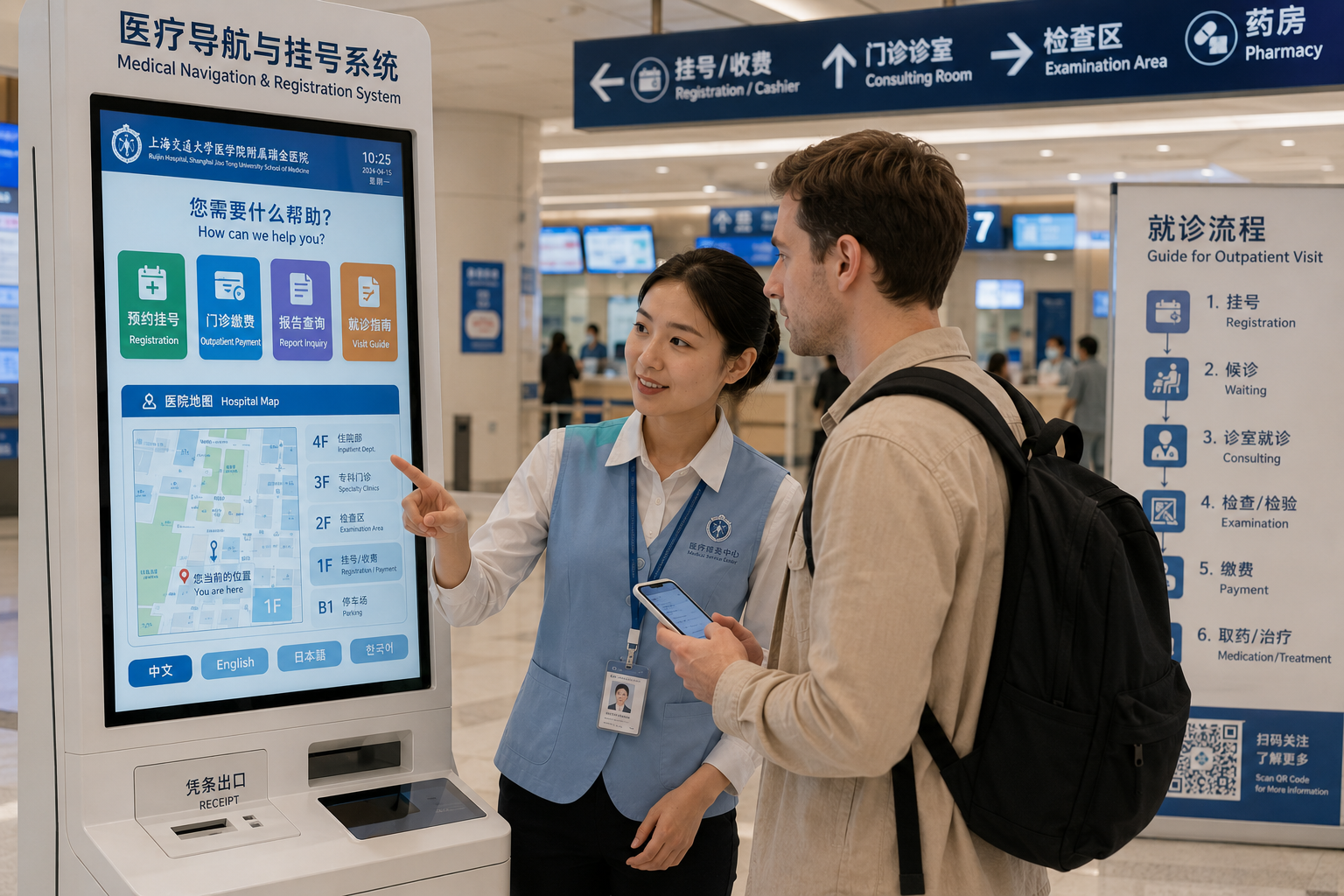
China operates one of the world's largest healthcare systems, serving over a billion people across public hospitals, specialized centers, private clinics, VIP wards, and international hospitals. The system prioritizes efficiency, specialist access, and high patient throughput — which creates an experience that can feel unfamiliar to foreigners accustomed to appointment-heavy Western systems. Many frustrations foreign patients experience come not from poor care, but from misunderstanding how the system is designed to function.
Common Misconceptions About Chinese Hospitals
Misconception 1 — Chinese Hospitals Are Low Quality: This is one of the most common misunderstandings. Many major Chinese hospitals are extremely advanced, particularly in Shanghai, Beijing, Guangzhou, and Chengdu. China has world-class specialists in oncology, orthopedics, rehabilitation, cardiovascular medicine, Traditional Chinese Medicine, and robotics-assisted surgery. The difference is often not the medical technology itself, but the patient experience surrounding it. Misconception 2 — Public Hospitals Are Unsafe for Foreigners: Many foreigners assume they must only use expensive international hospitals. While international hospitals offer convenience and English support, China's top public hospitals are where many of the country's best specialists actually work. Many VIP departments are physically located inside public hospitals, and large hospitals routinely treat international patients. The real challenge is navigation and communication, not medical capability. Misconception 3 — Everything Is Impossible Without Speaking Chinese: Language barriers are real, but the situation is improving rapidly. Major cities increasingly provide international patient centers, English-speaking coordinators, translation apps integrated into care, and foreign patient departments. Misconception 4 — Chinese Hospitals Are Chaotic and Disorganized: What foreigners often interpret as chaos is usually extreme efficiency operating at scale. Chinese hospitals are designed around fast patient turnover, high specialist utilization, centralized testing systems, and digital registration and payment. Once understood, many foreigners are surprised by how quickly testing and specialist consultations can happen compared to their home countries. The biggest challenge for foreigners in Chinese hospitals is usually understanding the system — not the quality of care itself.
The Real Challenges Foreign Patients Should Prepare For
Navigation Complexity: Large hospitals can feel overwhelming. Patients may need to register first, pay before treatment, move between departments independently, and use digital kiosks or mobile apps. Hospitals often function more like large transportation hubs than small neighborhood clinics. Payment Expectations: Unlike some Western healthcare systems, upfront payment is common in China — especially for foreign patients. Even insured patients may need to pay first and submit reimbursement later. Digital payments such as WeChat Pay and Alipay are widely used. Different Appointment Culture: Chinese healthcare emphasizes specialist access and speed. Wait times for specialists may actually be shorter than in many Western systems, but consultations may feel faster and patients are expected to arrive prepared. Public vs International Experience Gap: International hospitals feel similar to Western private clinics; public hospitals feel much more operational and high-volume. Neither is inherently better — they simply serve different priorities.
How Foreign Patients Can Dramatically Improve Their Experience
Choose the Right Hospital Type: International hospitals offer comfort and language support; VIP wards offer a balance of quality and convenience; public hospitals provide the strongest specialist access and affordability. Matching the hospital type to your needs is the single most impactful decision. Bring Organized Medical Records: Previous diagnoses, imaging scans, medication lists, and insurance documents all improve efficiency significantly and help doctors understand your case faster. Set Up Digital Payment: Having WeChat Pay, Alipay, or an international-friendly payment method ready before your visit greatly simplifies hospital logistics. Use Translation Support Proactively: Even basic preparation helps enormously — translation apps, printed symptom descriptions in Chinese, the hospital name written in characters, or a medical coordinator for complex cases. Common mistakes to avoid: choosing hospitals based only on online reviews, assuming all hospitals operate like Western systems, ignoring digital payment setup, arriving without translated medical records, and automatically avoiding public hospitals.
Summary
Chinese hospitals are not mysterious once you understand the structure behind them. The system is designed for speed, scale, and specialist access. With preparation, proper hospital selection, and realistic expectations, foreign patients can access advanced, efficient, and often highly specialized medical care throughout China.
This article is for informational purposes only and does not constitute legal, immigration, visa, medical, or insurance advice. Visa, transit, registration, and entry rules can change; verify current requirements with official government, embassy, airline, immigration, and hospital sources before acting.